

Let’s discuss how we can work together!

Modern parking facilities demand more than manual entry systems and basic access cards. They require intelligent automation, real-time control, and secure vehicle identification. Omnitec India’s RFID Parking System is designed to deliver seamless, touch-free, and highly secure vehicle access management across commercial, residential, industrial, and smart city environments.
Our system integrates advanced RFID readers, encrypted vehicle tags, smart controllers, and centralized management software to ensure efficient traffic flow, improved security, and complete operational visibility.
Whether you require a Long Range RFID Parking System for high-traffic environments or a controlled RFID Vehicle Access Control solution for restricted premises, our platform is engineered for scalability, reliability, and performance.

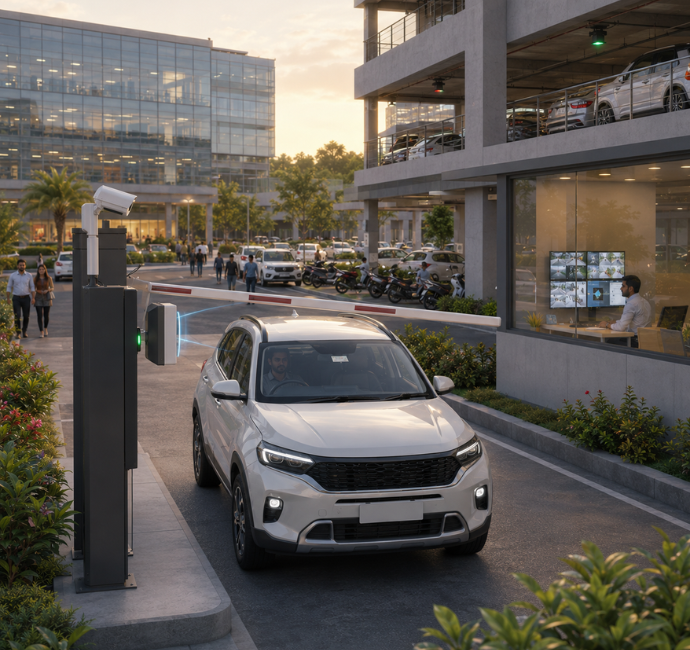
An RFID Parking System is an automated vehicle access management solution that uses Radio Frequency Identification (RFID) technology to identify and authenticate vehicles without manual intervention.
Each authorized vehicle is equipped with an RFID tag, typically placed on the windshield. When the vehicle approaches the entry or exit point:
Unlike traditional parking systems that rely on physical tickets or manual verification, an RFID Car Parking System ensures faster processing, enhanced security, and reduced human dependency.
Core Components:
This smart automation transforms conventional parking into a Smart RFID Parking Solution that enhances both user experience and facility control.
As urban infrastructure grows more complex, parking facilities must manage:
An RFID Parking System addresses these challenges through automation and intelligent access control.
Key Reasons RFID is Becoming Standard:
1. Faster Vehicle Processing
Long-range readers allow vehicles to pass without stopping, reducing entry congestion.
2. Enhanced Security
Each RFID tag is uniquely encoded and linked to vehicle and user data.
3. Contactless Operation
Ideal for modern hygiene standards and frictionless movement.
4. Data-Driven Management
Every entry and exit is recorded, enabling real-time monitoring and analytics.
5. Reduced Manpower Dependency
Automation reduces reliance on guards for identity verification.
For gated communities, IT parks, corporate campuses, logistics hubs, and smart cities, RFID-based vehicle automation is no longer optional — it is infrastructure necessity.

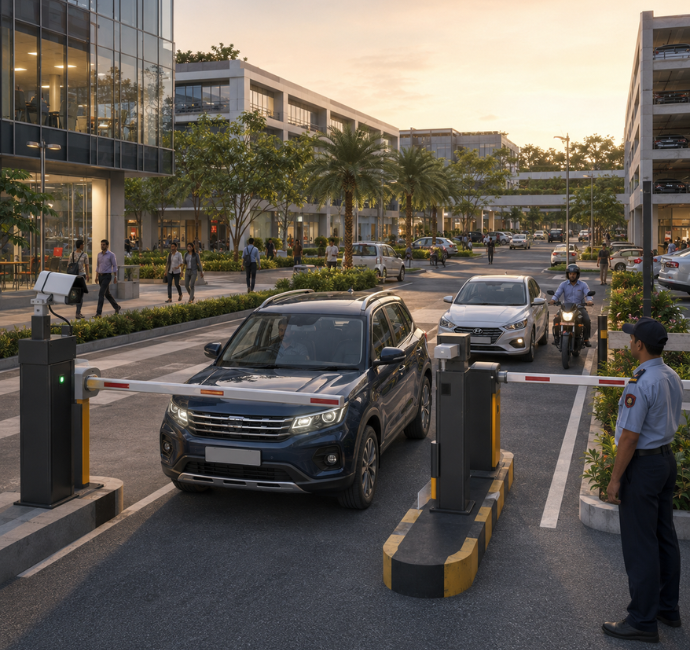
Selecting the correct RFID type is critical to system performance.
1. UHF RFID (Ultra High Frequency – 860–960 MHz)
Most widely used in parking automation.
Advantages:
Best suited for:
This forms the backbone of a Long Range RFID Parking System.
2. HF RFID (High Frequency – 13.56 MHz)
Used where short-range authentication is required.
Advantages:
Best suited for:
3. Active RFID (Battery Powered)
Used in high-security or large-scale environments.
Advantages:
Used in:
Choosing the right technology depends on traffic density, security requirements, and site layout.
Understanding the operational workflow is essential for facility decision-makers.
Step 1: Vehicle Registration
Authorized vehicles are registered in the system database.
Step 2: RFID Tag Installation
A secure windshield RFID tag is assigned and linked to the vehicle profile.
Step 3: Vehicle Detection
As the vehicle approaches:
Step 4: Authorization Check
The system cross-verifies:
Step 5: Barrier Activation
If validated:
<If unauthorized:
Step 6: Data Logging & Monitoring
All entries and exits are recorded for:
This automated workflow makes the RFID Vehicle Access Control system both secure and efficient.
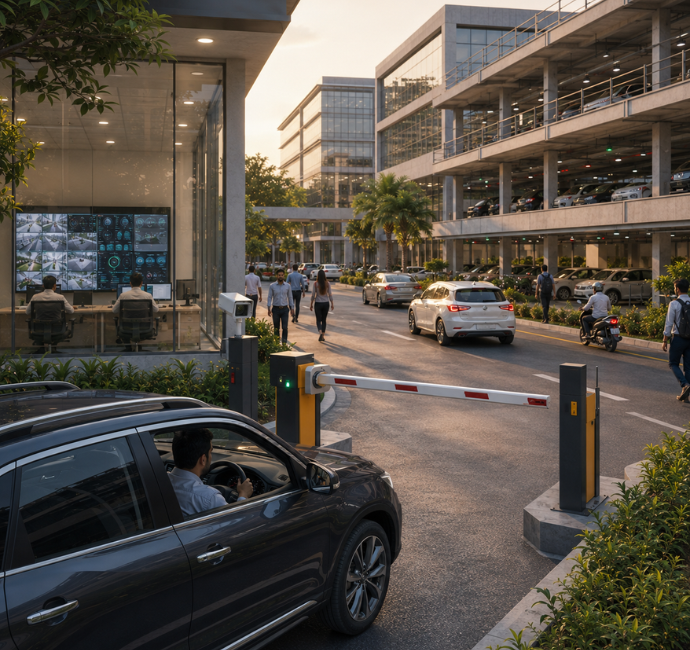
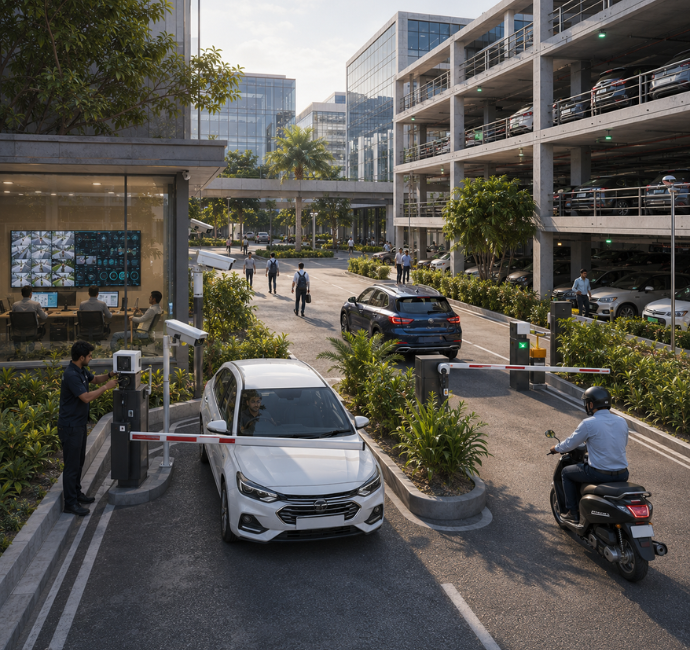
Our RFID Parking System is engineered with advanced technical and operational capabilities.
Security Features
Operational Features
Smart Management Features
Scalability Features
This transforms basic access into a fully integrated Smart RFID Parking Solution.
A robust architecture ensures long-term performance and reliability.
Hardware Components
Each hardware element is designed for:
Software Components
Software capabilities include:
System communication can be configured via:
This ensures flexibility for different infrastructure environments.

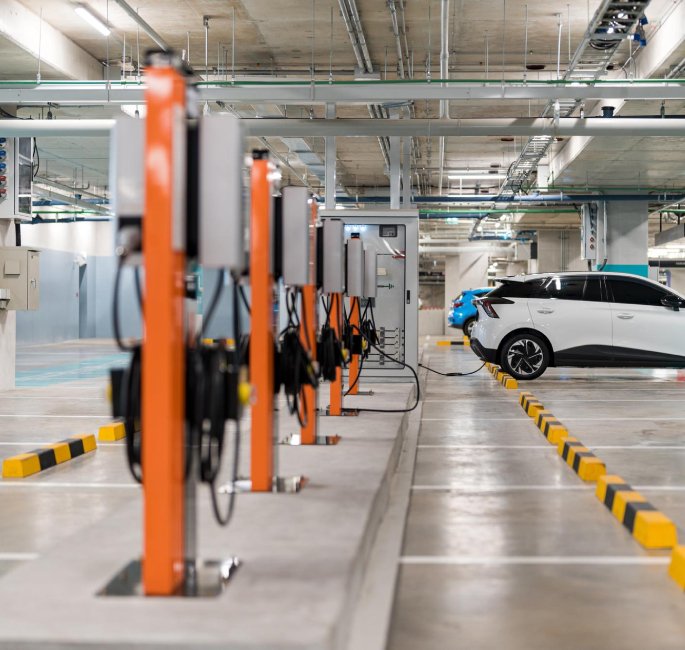
A modern RFID Parking System should not function in isolation.
Omnitec’s solution integrates seamlessly with:
Integration Benefits:
This creates a comprehensive parking automation ecosystem rather than a standalone entry solution.
Our RFID Car Parking System is deployed across diverse sectors:
Residential & Gated Communities
Corporate Offices & IT Parks
Industrial & Manufacturing Units
Hospitals & Educational Institutions
Airports & Large Infrastructure
Each deployment is customized based on traffic volume, security sensitivity, and operational objectives.

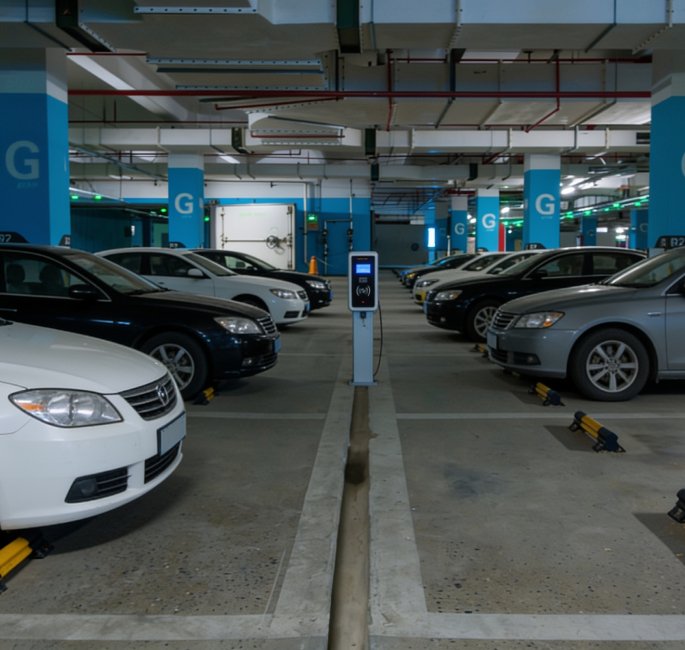
Investing in RFID automation delivers measurable operational advantages.
Operational Benefits
Security Benefits
Financial Benefits
User Experience Benefits
The system improves both security posture and operational efficiency.
Choosing the right implementation partner is as critical as selecting the technology.
Industry Expertise
We specialize in parking automation, vehicle access control, and integrated security systems across India.
Customized Deployment Approach
Each project is engineered after:
Scalable & Future-Ready Design
Our systems are built to:
Strong Technical Support
Compliance & Reliability
All components are tested for:
Omnitec India positions itself not just as a vendor, but as a long-term automation partner.
Below are standard technical benchmarks (customizable per project):
RFID Reader Specifications
RFID Tags
Controller & Software
Barrier System
Omnitec India’s RFID Parking System is a robust, scalable, and secure vehicle access automation solution engineered for modern infrastructure demands. Whether you require a Long Range RFID Parking System, integrated RFID Vehicle Access Control, or a complete Smart RFID Parking Solution, our technology ensures seamless mobility, enhanced security, and operational intelligence.
An RFID Parking System is an automated vehicle access solution that uses Radio Frequency Identification technology to identify and authenticate vehicles. Each authorized vehicle is assigned an RFID tag installed on the windshield. When the vehicle approaches the entry or exit gate, the RFID reader scans the tag, verifies the credentials in the system database, and automatically opens the boom barrier if access is valid. The system logs every transaction in real time, ensuring secure and seamless vehicle movement.
A Long Range RFID Parking System typically uses UHF RFID technology and can detect vehicles from a distance of 3 to 12 meters, allowing vehicles to pass without stopping. This is ideal for high-traffic areas such as corporate campuses and industrial facilities. Short-range systems use HF RFID technology and require vehicles to come closer to the reader, making them suitable for restricted or low-speed access zones.
Yes. Modern RFID Parking Systems use encrypted and uniquely programmed RFID tags that cannot be easily duplicated. Advanced systems include anti-cloning protection, tamper-evident tags, and blacklist management features. Additionally, integration with ANPR (Automatic Number Plate Recognition) can provide dual-layer verification for enhanced security.
Yes. An RFID Vehicle Access Control system is designed to integrate seamlessly with automated boom barriers. The RFID reader communicates with the access controller, which triggers the barrier to open upon successful authorization. Most modern RFID systems are compatible with standard boom barrier mechanisms and can be integrated without replacing existing infrastructure.
An RFID Car Parking System offers several operational and security advantages:
It enhances both operational efficiency and user experience.
Yes. A properly designed RFID Parking System can process vehicles within milliseconds. Long-range UHF readers allow vehicles to move continuously without stopping, making them ideal for high-density environments such as IT parks, residential townships, airports, and logistics hubs.
A Smart RFID Parking Solution is widely used across:
Any facility requiring secure and automated vehicle access can benefit from RFID-based automation.
Internet connectivity is not mandatory for basic operations if the system is deployed on a local server. However, cloud-based deployments require internet access for remote monitoring, centralized control, and multi-location management. Many organizations prefer hybrid models for flexibility and redundancy.
Passive UHF RFID windshield tags typically last between 5 to 7 years under normal operating conditions. Since they do not require batteries, they have a long operational life. Active RFID tags (battery-powered) may require battery replacement depending on usage and environmental factors.
Yes. Modern RFID Parking Systems can integrate with mobile parking applications, visitor management systems, parking guidance systems, and billing platforms through APIs. This enables centralized monitoring, digital pass issuance, subscription-based access management, and real-time parking analytics — transforming the system into a complete smart parking ecosystem.
TagMaster AB, a leading world wide producer of RFID long range readers and ANPR camera has enjoyed a long and successful cooperation with Omnitec Systems India Pvt Ltd based in Dubai. Omnitec has successfully represented TagMaster AB in UAE and we are now celebrating more than 10 years of partnership which has been an incredible journey. Your commitment to excellence and trust in Tagmaster has been the cornerstone of our success together. Here’s to many more years of collaboration!

Vice President Sales Parking/Access/ Security
TagMaster AB
We Adaptive Recognition Hungary Zrt. are proud to act as a longstanding supplier to Omnitec Security Systems L.L.C., one of our valued partners.
As a supplier, we understand the significance of consistency and quality in our offerings. Over the years, we have strived to meet and exceed Omnitec ’s expectations, delivering our products with punctuality and unwavering dedication.
We appreciate the opportunity to provide our products to Omnitec Security Systems and look forward to many more years of fruitful collaboration.

Carmen Sales Manager
Working with Omnitec Security Systems for more than 15 years has been a rewarding experience. Their commitment to quality and professionalism is unmatched which makes them a giant player in the Parking Systems Integration industry. They foster strong, transparent relationships with their suppliers, ensuring clear communication, timely payments, and a collaborative atmosphere that fosters mutual growth. It’s a pleasure to work with an organization that values its supplier relationships as highly as its customer relationships.

Founder
Omnitec is our valued partner in Dubai; thanks to their young, professional and highly enthusiastic team, Inkema has increased its presence and reputation in the Emirates, by providing excellent service and accurate professional guidance in the field of loading bay equipment and industrial doors. We look forward for many years more of fruitful cooperation!

Inkema Export Sales Area Manager for the Middle East, Asia & Pacific
Working with Omnitec Systems India Pvt Ltd has been a pleasant experience so far and it will be in the future as well. They learned me a lot about the market situation in The Middle East and together we became a good team from the beginning. Good people who know where they talk about.
Omnitec is a company with transparent communication, clear in their askings and willing to help.
Looking forward to many more years.
Senior Accountmanager
Condoor
Let’s discuss how we can work together!