




Let’s discuss how we can work together!

Transforming Parking Efficiency with Advanced Parking Guidance System Technology
Navigating large parking facilities should not be stressful, time-consuming, or inefficient. A modern Parking Guidance System eliminates uncertainty by directing drivers to available spaces in real time, improving traffic flow, reducing congestion, and enhancing overall parking experience.
At large malls, IT parks, airports, hospitals, and commercial complexes, unmanaged parking leads to vehicle congestion, increased emissions, driver frustration, and revenue leakage. A well-designed Smart Parking Guidance System resolves these challenges by using intelligent sensors, LED indicators, and centralized software to monitor and guide vehicles accurately.
As one of the leading Parking Guidance System Companies, Omnitec India delivers scalable, enterprise-grade Car Parking Guidance Technology designed for high-traffic environments. Our system combines real-time data processing, intelligent analytics, and robust hardware infrastructure to ensure seamless operations across multi-level and large-capacity parking facilities.

Understanding how a Parking Guidance System works helps decision-makers evaluate its technical capability and operational impact.
Step 1: Vehicle Detection at Entry
Step 2: Slot-Level Occupancy Detection
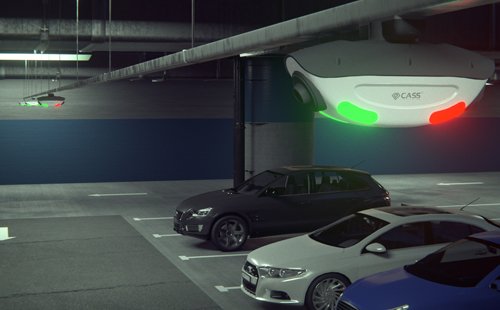
Each parking bay is equipped with advanced sensors such as:
These devices function as a Parking Occupancy Monitoring System, detecting whether a slot is occupied or vacant.
Step 3: LED Parking Indicators
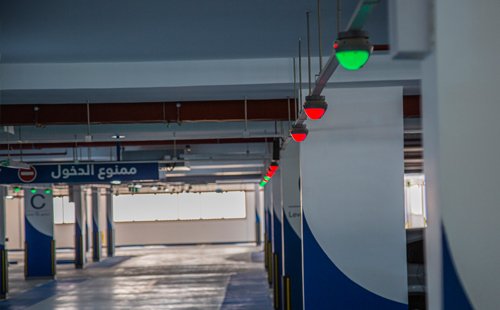
Above each parking bay, LED Parking Indicators display:
This visual guidance reduces searching time dramatically.
Step 4: Real Time Data Processing
Sensor data is transmitted to a central server or cloud-based dashboard. The Real Time Parking Availability System updates:
Step 5: Directional Signage & Indoor Navigation
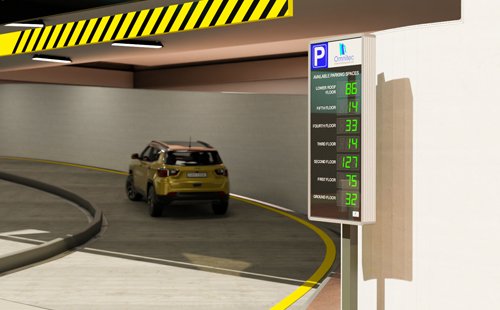
Digital display boards at strategic junctions guide drivers using arrows and live availability numbers. In advanced configurations, an Indoor Parking Navigation System can guide vehicles to specific slots via mobile app integration.
Step 6: Analytics & Monitoring
Operators access:
This structured workflow ensures smooth traffic movement and maximum space utilization.
Not all facilities require the same configuration. Leading Parking Guidance System Companies offer multiple technology models depending on operational scale.
1. Ultrasonic Sensor-Based Parking Guidance System
2. Camera-Based Smart Parking Guidance System
3. Hybrid Parking Guidance System
4. App-Integrated Indoor Parking Navigation System
Selecting the right Car Parking Guidance Technology depends on facility size, budget, security requirements, and integration expectations.
To ensure reliability and scalability, the system must meet strict technical standards.
Sensor Specifications
Communication Infrastructure
LED Indicator System
Software & Dashboard
Scalability
A technically strong system ensures long-term reliability, minimal downtime, and high operational performance.
A high-performance Parking Guidance System should offer:
These features collectively create a comprehensive Real Time Parking Availability System that optimizes traffic flow and maximizes efficiency.
For facility owners and operators, the impact goes beyond convenience.
1. Increased Space Utilization
Smart allocation reduces idle slots and improves occupancy rates.
2. Higher Revenue Potential
Optimized space management increases vehicle turnover and billing accuracy.
3. Reduced Congestion
Clear guidance prevents internal traffic jams within multi-level facilities.
4. Data-Driven Decision Making
Operators gain insights into:
5. Lower Operational Costs
Automation reduces manual supervision and staffing requirements.
6. Enhanced Brand Perception
Modern parking systems improve customer satisfaction and elevate property value.
By implementing advanced Car Parking Guidance Technology, operators position their facilities as future-ready and technologically advanced.
From the driver’s perspective, convenience defines the parking experience.
Faster Parking
Drivers locate available spaces within seconds using LED Parking Indicators.
Reduced Fuel Consumption
Less time searching for parking reduces fuel wastage and vehicle emissions.
Stress-Free Navigation
Directional displays and Indoor Parking Navigation System eliminate confusion.
Improved Safety
Organized vehicle movement reduces collision risks inside parking areas.
Transparent Availability Information
The Real Time Parking Availability System ensures drivers always know the availability status before entering each zone.
A smooth parking experience directly influences customer loyalty and satisfaction.
The scalability of modern Smart Parking Guidance System solutions makes them ideal for:
Each industry faces high vehicle inflow, making real-time parking guidance essential for operational efficiency.
When selecting among Parking Guidance System Companies, expertise, infrastructure capability, and execution experience matter significantly.
Industry Expertise
Omnitec India specializes in delivering enterprise-grade parking automation solutions tailored for Indian infrastructure demands.
End-to-End Integration
Technology-Driven Approach
Our systems combine:
Customizable & Scalable Solutions
We design systems based on:
Long-Term Support & Maintenance
We ensure:
Our commitment to reliability, performance, and innovation positions Omnitec India among trusted leaders in the Parking Guidance System domain.
| Feature | Traditional Parking | Smart Parking Guidance System |
| Slot Detection | Manual | Sensor-Based Detection |
| Space Availability | Guesswork | Real Time Parking Availability System |
| Traffic Flow | Unorganized | Structured & Guided |
| Analytics | None | Data-Driven Insights |
| Driver Experience | Stressful | Efficient & Seamless |
| Emission Levels | High | Reduced |
Traditional systems rely heavily on manual supervision, leading to inefficiencies. In contrast, modern Car Parking Guidance Technology enhances automation, accuracy, and user satisfaction.
As urban infrastructure continues to expand, parking management must evolve. A professionally designed Parking Guidance System is no longer a luxury—it is a necessity for high-capacity facilities.
By implementing a Smart Parking Guidance System, organizations can:
Partnering with experienced Parking Guidance System Companies ensures that your facility benefits from scalable technology, long-term reliability, and measurable operational improvement.
A Parking Guidance System is an intelligent parking solution that uses sensors, LED indicators, and centralized software to detect and display real-time parking availability. It guides drivers to vacant spaces quickly and efficiently, reducing congestion and improving overall parking management.
Modern systems function as a Real Time Parking Availability System, helping both drivers and operators optimize space utilization and reduce search time inside parking facilities.
A Smart Parking Guidance System operates through three core components:
When a vehicle occupies or vacates a parking slot, sensors detect the change instantly. The system updates the availability count in real time and displays it through directional signage and dashboards. This integrated Parking Occupancy Monitoring System ensures accurate guidance across all parking levels.
A complete Car Parking Guidance Technology solution typically includes:
These components work together to deliver accurate, scalable, and automated parking management.
Traditional parking relies on manual supervision and driver guesswork, leading to congestion and inefficient space usage.
A Real Time Parking Availability System, on the other hand:
This automation significantly improves operational efficiency and driver experience.
A professionally installed Parking Occupancy Monitoring System can achieve detection accuracy of 98% or higher, depending on sensor type and installation quality.
Advanced systems offered by leading Parking Guidance System Companies use high-precision ultrasonic or camera-based sensors with rapid response times, ensuring reliable real-time updates across large facilities.
Yes. A modern Parking Guidance System can seamlessly integrate with:
This makes it a scalable and future-ready Smart Parking Guidance System suitable for enterprise and municipal projects.
Industries with high vehicle inflow gain significant operational advantages from implementing Car Parking Guidance Technology, including:
Any multi-level or high-capacity parking facility benefits from improved traffic flow and optimized space utilization.
An Indoor Parking Navigation System enhances convenience by directing drivers to available parking zones or specific slots through digital displays or mobile app integration.
This reduces search time, minimizes confusion, and ensures smoother vehicle movement within large or complex parking structures.
Selecting experienced Parking Guidance System Companies ensures:
Expert implementation minimizes downtime and ensures optimal system performance in high-traffic environments.
Yes. A Smart Parking Guidance System is a key component of smart city infrastructure. It integrates with centralized monitoring systems and supports data-driven urban mobility planning.
By reducing congestion and emissions while improving parking efficiency, it plays a vital role in building sustainable and intelligent city ecosystems.
TagMaster AB, a leading world wide producer of RFID long range readers and ANPR camera has enjoyed a long and successful cooperation with Omnitec Systems India Pvt Ltd based in Dubai. Omnitec has successfully represented TagMaster AB in UAE and we are now celebrating more than 10 years of partnership which has been an incredible journey. Your commitment to excellence and trust in Tagmaster has been the cornerstone of our success together. Here’s to many more years of collaboration!

Vice President Sales Parking/Access/ Security
TagMaster AB
We Adaptive Recognition Hungary Zrt. are proud to act as a longstanding supplier to Omnitec Security Systems L.L.C., one of our valued partners.
As a supplier, we understand the significance of consistency and quality in our offerings. Over the years, we have strived to meet and exceed Omnitec ’s expectations, delivering our products with punctuality and unwavering dedication.
We appreciate the opportunity to provide our products to Omnitec Security Systems and look forward to many more years of fruitful collaboration.

Carmen Sales Manager
Working with Omnitec Security Systems for more than 15 years has been a rewarding experience. Their commitment to quality and professionalism is unmatched which makes them a giant player in the Parking Systems Integration industry. They foster strong, transparent relationships with their suppliers, ensuring clear communication, timely payments, and a collaborative atmosphere that fosters mutual growth. It’s a pleasure to work with an organization that values its supplier relationships as highly as its customer relationships.

Founder
Omnitec is our valued partner in Dubai; thanks to their young, professional and highly enthusiastic team, Inkema has increased its presence and reputation in the Emirates, by providing excellent service and accurate professional guidance in the field of loading bay equipment and industrial doors. We look forward for many years more of fruitful cooperation!

Inkema Export Sales Area Manager for the Middle East, Asia & Pacific
Working with Omnitec Systems India Pvt Ltd has been a pleasant experience so far and it will be in the future as well. They learned me a lot about the market situation in The Middle East and together we became a good team from the beginning. Good people who know where they talk about.
Omnitec is a company with transparent communication, clear in their askings and willing to help.
Looking forward to many more years.
Senior Accountmanager
Condoor
Let’s discuss how we can work together!